
Starting a dance studio takes more than setting up mirrors and choosing music. It requires you to think through the class schedule, pricing, space setup, marketing, and finances. So, clear planning is important to manage operations and generate steady revenue.
Here’s an example for you to refer to. It’s about StepStone Dance Studio, a home-based studio in Colorado, owned by Daniel Henry. He has created this plan to get a small microloan to fund the initial studio setup.
Use this sample as a guide to organize your ideas and build a realistic plan for your own studio.
Dance Studio Business Plan (StepStone Dance Studio)
1. Executive Summary
StepStone Dance Studio is a home-based dance studio located in a residential basement in Aurora, Colorado. The studio offers small-group dance classes for children, teens, and adult beginners. The business runs as a low-risk, owner-managed studio with a fixed weekly class limit and low operating costs.
Daniel Henry is the owner and started StepStone Dance Studio after several years of assisting in local dance group classes and teaching beginner-level students. He chose to run the studio from his home to keep class sizes small. This will avoid the higher costs of renting a large commercial space. His teaching method focuses on steady weekly practice and clear step-by-step instruction within a six-student limit. The studio is structured to serve the neighborhood over the long term, rather than focusing on competitive programs or stage performances.
StepStone is requesting a small local bank microloan of $8,500 to cover one-time startup costs only. All startup funding, including owner capital and the bank loan, is completed before operations begin. The studio does not depend on future loans, the hiring of additional personnel, or a commercial location. From the start, the business is planned to earn enough cash to pay loans and daily expenses, while allowing the owner to keep control over class quality, scheduling, and workload.
Market Opportunity
The Denver–Aurora metro area has around 51 dance-related organizations, which together generate more than $17 million in annual revenue. On average, individual dance studios earn about $180,000 per year, mainly from group classes and private lessons.
This shows there is steady demand for dance instruction across different age groups. The mix of large studios and smaller neighborhood programs also suggests that the market supports simple, community-based models like StepStone.
What Makes StepStone Structurally Low Risk
StepStone Dance Studio operates differently from traditional dance studios. The business is designed around several key structural characteristics:
- No commercial lease or rent obligation
- No employees or external payroll commitments
- Fixed weekly class schedule (8 sessions per week)
- Capacity limits set by space and safety, not demand
Because there is no rent or payroll, the studio’s regular monthly expenses are limited to utilities, insurance, and the loan payment. This keeps fixed costs predictable and manageable within the planned class schedule.
Expense Structure Overview
StepStone Dance Studio maintains a low-cost structure by using a home-based model and employing no staff. This setup keeps costs simple and predictable.
The studio’s main ongoing expenses are:
- A fixed monthly loan payment for startup equipment
- Small increases in household utilities
- Low marketing costs focused on local promotion
- Insurance and basic permits
No owner salary or fixed compensation is included; owner draws depend on available cash and are not assumed as fixed expenses.
Because there is no rent or payroll, monthly fixed costs remain low. As enrollment becomes steady, revenue is sufficient to cover these expenses while maintaining a positive cash position, even at moderate student levels.
Financial Performance Snapshot (3-Years)
The table below presents projected financials for the first three years. Revenue increases gradually as enrollment stabilizes, while costs remain controlled under the fixed class schedule. The projections assume no expansion beyond the current space, class limits, or operating structure.
| Metric | Year 1 | Year 2 | Year 3 |
|---|---|---|---|
| Revenue | $26,300 | $32,300 | $40,600 |
| Net profit (before tax) | $19,737.56 | $25,722.79 | $33,838.90 |

2. Business Overview
StepStone Dance Studio is a single-member limited liability company owned by Daniel Henry. The business operates from his primary residence at 8147 Cedar Hollow Drive, Aurora, Colorado 80016, using a finished basement space set up for dance instruction.
The LLC structure provides liability protection while keeping administration simple. It fits the size of the business and avoids unnecessary reporting requirements.
Daniel Henry oversees all classes, along with scheduling, enrollment, and daily administrative responsibilities. He has experience teaching small group classes in hip-hop, jazz, and contemporary dance to beginner and intermediate students.
He established StepStone Dance Studio to provide structured, consistent instruction in a small, home-based setting that focuses on skill development and steady progress.
Purpose
StepStone Dance Studio is structured as a small, owner-operated teaching studio rather than a high-growth commercial operation. The focus is on stability, controlled enrollment, and consistent instruction.
The primary purpose of the business is to:
- Deliver consistent, structured dance instruction
- Maintain manageable class sizes
- Generate steady, predictable cash flow
- Operate within the owner’s available teaching hours and the capacity limits of the home-based space
The studio operates within a defined capacity based on available space and the owner’s teaching hours. The model is structured to maintain low overhead, stable operations, and manageable enrollment levels under the current schedule.
Home-Based Operating Structure and Capacity
StepStone Dance Studio operates from a finished residential basement designed for small-group instruction. The space supports up to six students per class and follows a fixed weekly schedule of eight sessions.
The home-based model eliminates commercial rent and payroll expenses. Monthly costs are limited to utilities, insurance, and the loan payment, which keeps fixed expenses predictable.
Revenue growth does not come from adding more classes or expanding space. Instead, projections assume gradual improvement in average attendance within the existing schedule. Financial planning is based on this fixed capacity structure.
Owner-Operated Execution Model
Daniel Henry performs all instructional and administrative functions at StepStone Dance Studio. He teaches every class and manages daily operations directly.
His responsibilities include:
| Area | Best For |
|---|---|
| Instruction | Teaches all group classes and private lessons |
| Scheduling | Manages class schedules and student registrations |
| Communication | Handles communication with students and parents |
| Studio Maintenance | Maintains studio space and equipment |
| Staffing Structure | No employees or contractors during the operating period |
| Cost Control | No payroll obligations; operating costs remain stable |
| Workload Management | Fixed weekly schedule within defined teaching hours and class capacity |
No employees or contractors are planned during the operating period. This structure avoids payroll obligations and keeps operating costs stable. The fixed weekly class schedule allows Daniel Henry to manage workload within defined teaching hours and capacity limits.
Defined Scope of Services and Activities
The studio maintains clear operational boundaries to prevent scope creep.
Included activities:
- Small-group dance instruction
- Beginner and intermediate level classes
- Limited private lessons and short workshops
Excluded activities:
- Competitive dance teams
- Large recitals or performances
- High-volume enrollment programs
- Multi-location or staff-based expansion
These boundaries simplify operations and keep expectations aligned for students, parents, and lenders.
Implications of the Business Model for Lenders
From a lending perspective, the operating model reduces downside risk and improves visibility into repayment capacity.
| Model Feature | Credit Implication |
|---|---|
| No commercial lease | Lower fixed obligations |
| No payroll | Reduced operating risk |
| Fixed weekly schedule | Predictable revenue ceiling |
| Asset-only loan use | No funding of operating losses |
| Break-even near full scheduled capacity | Predictable operating profile |
The business is designed to service its debt under conservative assumptions without relying on future expansion or refinancing.
3. Market Analysis
Local Market Validation – Aurora, Colorado
A review of dance studio listings in Aurora, Colorado, including public listings on Yelp and Google Maps, shows multiple active studios operating within the service area. These include commercial studios, neighborhood operators, and recreation-based programs.
The presence of varied studio formats, pricing levels, and age-focused programs confirms an established local market for dance instruction. StepStone’s small class size and home-based setup allow it to serve this existing demand in a simple and focused way.
U.S. Dance Studio Industry
The U.S. dance studio industry generated approximately $5.0 billion in revenue in 2025, reflecting stable performance in recent years. Revenue has grown at a modest pace, with a compound annual growth rate of about 0.8% between 2020 and 2025. The industry includes more than 14,600 studio establishments nationwide, with a mix of small independent operators and larger commercial providers.
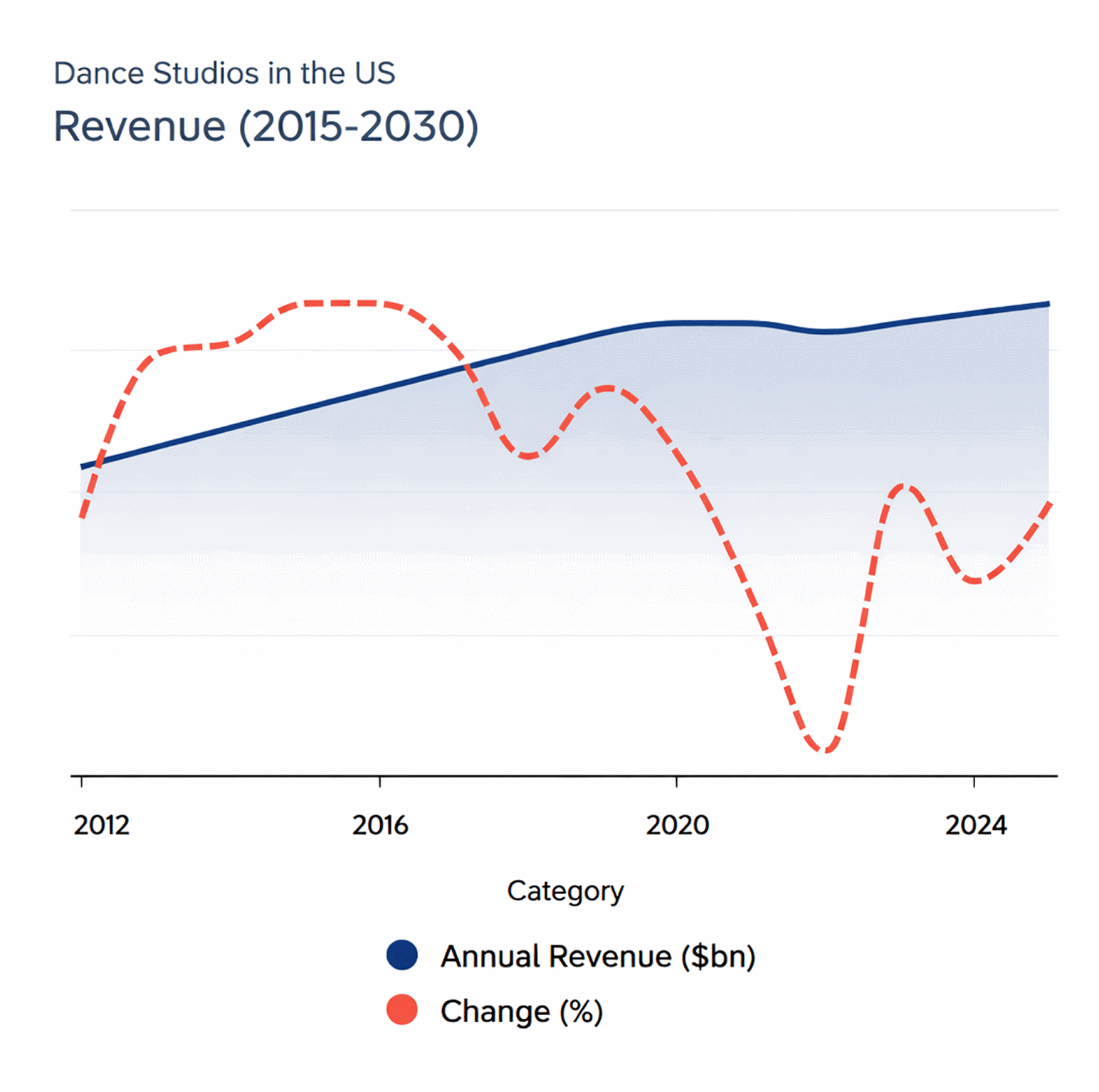
While year-to-year growth fluctuates, overall revenue has remained stable, indicating consistent baseline demand for dance instruction. This suggests that dance classes continue to be a regular activity for many families and adults. Not just a short-term trend.
Most studios earn their income from weekly group classes and private lessons, which matches StepStone’s service model.
Target Customer Segments
StepStone serves three clearly defined customer segments. Each segment aligns with the studio’s pricing, class size, and instructional style.
| Segment | Description | What Matters Most |
|---|---|---|
| Adult Beginners and Hobby Dancers | Adults who want to learn dance for exercise or fun often start again after a long break or for the first time. | Small classes, comfortable setting, same teacher every class |
| Children and Teens (Ages 8–16) | Kids and teens are signed up by parents for regular dance classes outside of school. | Safety, steady teaching, and schedules that are easy to manage |
| Parents as Decision-Makers | Parents who choose and pay for dance classes for their children. | Reasonable prices, close location, clear and fixed class times |
Demand Drivers
People choose StepStone Dance Studio because it fits easily into their daily schedules. The studio is located within the neighborhood, limits each class to six students, and provides instruction directly from the owner in every session.
Pricing is set lower than most large studios, and students are not required to sign long-term contracts. Many families and adult learners value the fixed schedule, small class sizes, and consistent instruction from the same teacher each week.
Competitive Environment
StepStone Dance Studio operates alongside commercial dance studios and organized recreation programs in the local area. The market includes a mix of large commercial studios, smaller neighborhood studios, and public recreation programs.
Types of Alternatives in the Area
- Commercial dance studios in Aurora, Parker, and Centennial
- Local recreation center dance programs
- Informal community or school-based classes
These alternatives vary widely in pricing, class size, teaching style, and enrollment commitment.
Key Competitors
The competitors listed below represent the primary alternatives customers consider within StepStone Dance Studio’s service radius.
(1) Pulse Dance Academy (Aurora, CO)
Pulse Dance Academy is a well-established local studio offering a wide range of dance programs for children, teens, and adults. It mainly serves families seeking structured, performance-oriented instruction in a commercial studio setting.
Strengths
- Established local studio with brand recognition
- Large facility with multiple rooms
- Wide range of dance styles and age groups
- Structured programs and recital opportunities
Weaknesses
- Higher tuition and additional fees
- Larger class sizes
- Long-term enrollment commitments
- Less individual attention for beginners
(2) Rise Dance Collective (Parker, CO)
Rise Dance Collective focuses on contemporary and performance-based dance training and mainly attracts teens and more advanced students. The studio emphasizes technique, performance outcomes, and modern studio environments.
Strengths
- Modern studio environment
- Structured class formats with clear progression
- Experienced instructors
- Performance-oriented programs for committed students
Weaknesses
- Less suitable for beginners
- A performance-focused culture that may discourage new dancers
- Higher cost compared to small local studios
- Longer travel distance for nearby neighborhoods
(3) Elite Motion Studio (Centennial, CO)
Elite Motion Studio offers advanced dance training and competitive programs for serious dancers. Its services are designed for students seeking performance pathways and professional-level instruction.
Strengths
- Advanced training programs
- Competitive teams and performance pathways
- Strong reputation among serious dancers
Weaknesses
- High financial commitment
- Competitive environment not suited for casual learners
- Large class formats
- Limited flexibility in scheduling
(4) Local Recreation Center Dance Programs
Local recreation center programs provide basic dance classes as part of broader community offerings. Families often use these programs for low-cost, short-term participation.
Strengths
- Low pricing
- Short-term or session-based enrollment
- Easy access for families
- Minimal commitment required
Weaknesses
- Large class sizes
- Rotating or part-time instructors
- Limited progression or structured development
- Inconsistent schedules
Competitive Positioning
StepStone Dance Studio follows a different operating approach compared to the competitors listed above. The business focuses on small-group instruction and controlled enrollment rather than performance programs or large-scale operations.
StepStone Dance Studio competes through:
- Smaller class sizes limited to six students
- Direct instruction provided by the owner
- Fixed weekly class scheduling
- Lower pricing than most commercial studios
The studio does not offer competitive teams, performance-based programs, or large productions. This keeps operations simple and consistent with its home-based model.
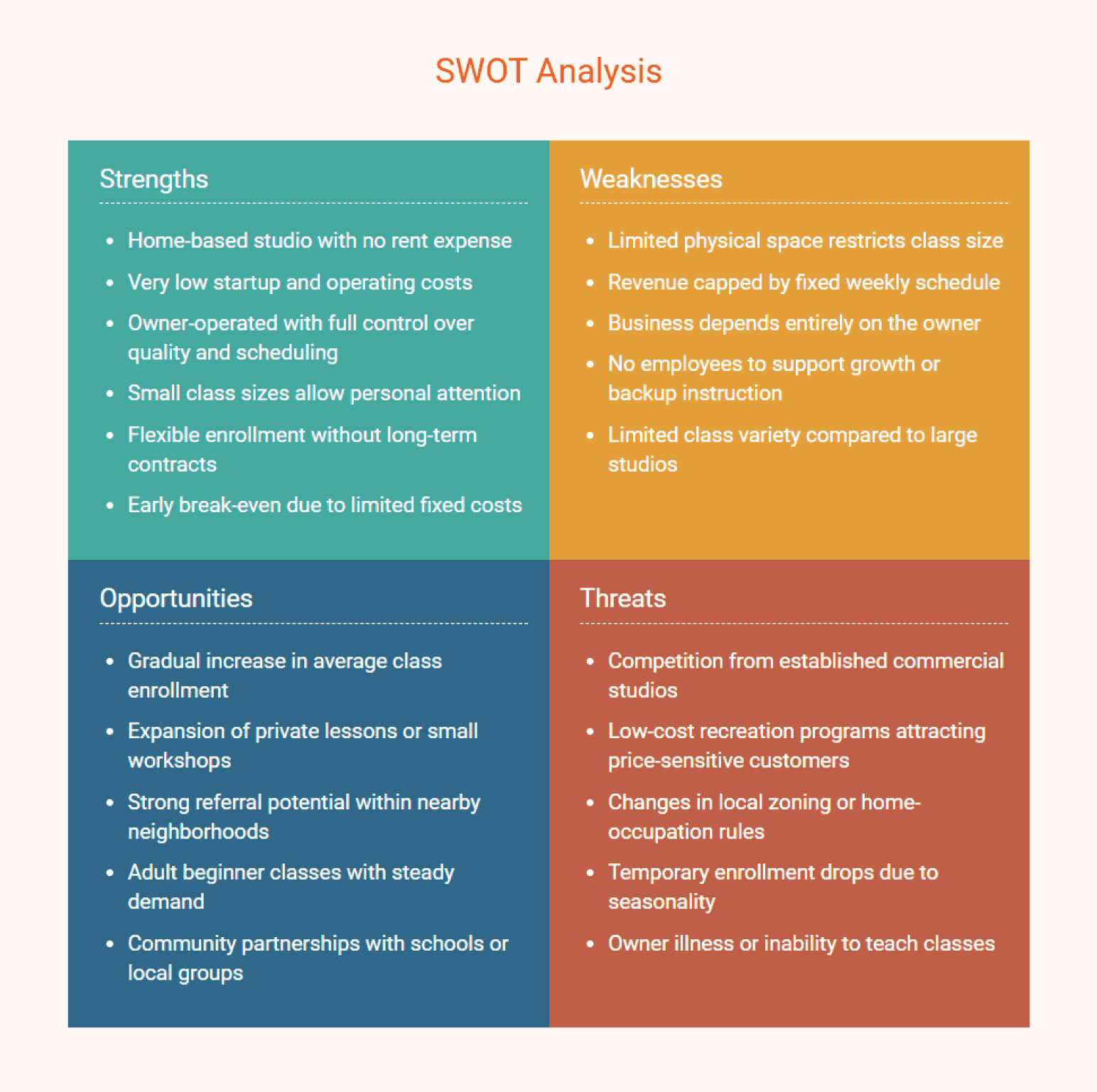
SWOT Analysis
4. Services Offered
StepStone Dance Studio operates from a home-based studio and offers a limited range of dance instruction services. Daniel Henry manages the studio directly and teaches all group classes and private lessons.
He works exclusively with beginner- and intermediate-level students and does not offer competitive or performance-based programs. This focused structure allows him to maintain consistent instruction, manageable schedules, and full control over daily operations.
Core Services
Group Dance Classes
Group dance classes are the primary service and the main source of revenue. Classes run on a fixed weekly schedule, and students must register in advance. Each session is limited to a maximum of six students, allowing for individual attention and safe use of the home-based space.
Classes follow a consistent structure. Each session begins with basic warm-up movements, followed by guided instruction on new steps and techniques. Classes end with light movements to help students cool down. This format keeps instructions clear, repeatable, and easy for students to follow each week.
Private Dance Lessons
Private dance lessons are offered on a limited basis for students who want one-on-one instruction or additional support. Adult learners and students working toward specific skill goals often choose these sessions.
Private lessons are scheduled around the existing group class timetable and are kept intentionally limited. This ensures the regular schedule remains consistent and the overall workload stays within planned teaching hours.
Dance Styles Offered
| Dance Style | Instruction Focus |
|---|---|
| Hip-Hop | Rhythm, coordination, and basic movement skills |
| Jazz | Technique, balance, and structured routines |
| Contemporary | Controlled movement and expressive technique |
These styles are selected because they work well in small-group settings and do not require large floor areas or specialized equipment.
Pricing Overview
The studio keeps pricing simple and affordable. Prices reflect small class sizes and direct owner instruction.
| Service | Price |
|---|---|
| Group class (per session) | $15 |
| Monthly package (8 classes) | $110 |
| Private lesson (60 minutes) | $40 |
Students enroll on a monthly basis and pay in advance to secure their place in class.
Special Services
The studio also offers a small number of additional services that fit within the existing schedule and space limits.
Choreography Services
Daniel Henry provides choreography services for school or community events. He schedules this work outside regular class hours when possible.
Small-Group Private Sessions
The studio offers small-group private sessions for birthdays or special occasions. These sessions follow the same space and safety limits as regular classes, and are scheduled only when time is available.
Short Workshops
Daniel Henry might run short workshops during school holidays or summer breaks. Each workshop covers one dance style or skill. Students don't need a long commitment to attend.
These workshops give students something extra without changing the regular weekly classes.
Enrollment Rules and Service Delivery Controls
The studio has clear rules to keep things running smoothly. All students must register before attending. No walk-ins. Each class is limited to six students, and the weekly schedule doesn't change.
Students need to pay in advance to secure their spot. This reduces cancellations and keeps attendance consistent. These rules help the studio work well in a home-based setting.
Excluded Services
StepStone Dance Studio does not offer services that would increase operational load or conflict with the home-based structure. This includes competitive dance teams, large recitals or performances, intensive training programs, open practice sessions, or high-volume enrollment formats.
These exclusions help keep expectations clear and ensure the studio operates exactly as planned.
Liking the plan you're reading? It's AI generated.
Generate Your Own Using Bizplanr AI
5. Marketing and Sales Strategy
We do not spend much on marketing. We only promote the studio in simple ways that fit our budget. Our aim is to keep our classes full and make sure current students continue their training.
We are not trying to collect a long list of new leads. Since our class times are fixed and space is limited, we only bring in the number of students we can properly teach. The owner runs every class, so we grow at a pace that we can manage well.
Target Customer Reach Approach
At StepStone, our marketing targets residents within a 3 to 5-mile radius of the studio. Because classes are home-based and limited in size, we prioritize nearby households that can attend regularly without long travel times.
Primary decision-makers include:
- Parents enrolling children and teens
- Adult beginners enrolling themselves
Our messaging emphasizes small class sizes, consistent instruction, and a convenient location. We do not promote competitive training or performance-based outcomes.
Primary Marketing Channels
The studio relies on a small number of proven, local promotional channels rather than a wide mix of platforms.
Core Channels Used
- Local Facebook and Instagram community groups
- Neighborhood flyer distribution
- Word-of-mouth referrals from existing students
- Informal partnerships with nearby schools or community groups
These channels are selected because they reach nearby households directly and require minimal ongoing expense.
Marketing Budget Control
Marketing spending is intentionally limited and focused on local visibility. The studio does not rely on paid digital campaigns or ongoing advertising services. Marketing activity is kept simple and aligned with class capacity.
Marketing Budget Allocation
| Category | Approach | Share of Marketing Budget |
|---|---|---|
| Social media | Organic posts and local community groups | ~40% |
| Print materials | Small-batch flyers and local notices | ~30% |
| Partnerships | Relationship-based referrals, no fees | ~20% |
| Paid advertising | Occasional use only | ~10% |
The marketing budget is reviewed periodically to ensure costs remain low and enrollment stays within the studio’s planned capacity.
Enrollment Funnel and Sales Process
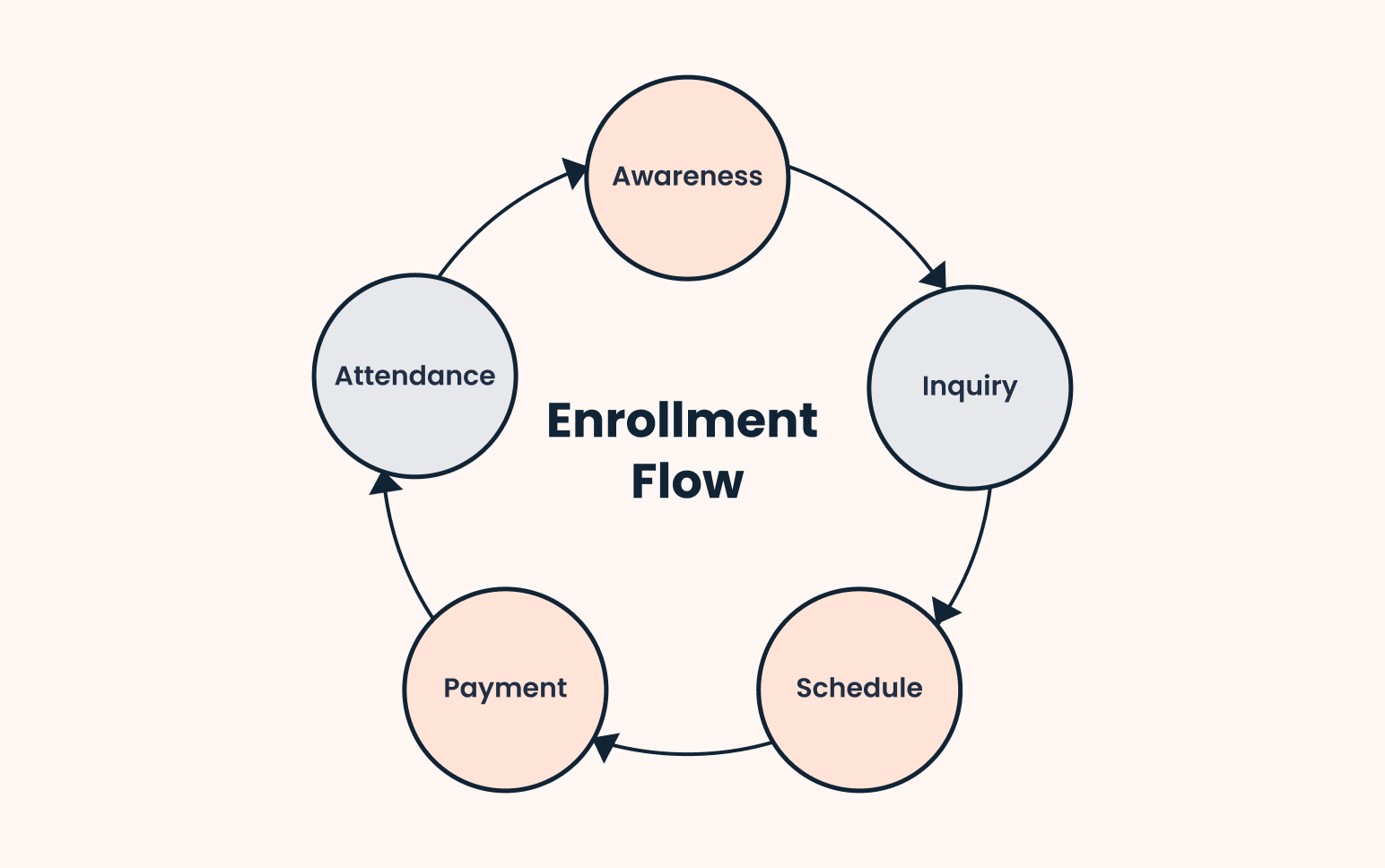
The enrollment process at StepStone Dance Studio is very clear and simple. Daniel Henry handles all inquiries directly. Interested parents or students reach outthrough phone call or email to ask about available classes.
Daniel reviews the student’s age and experience level to check the most suitable existing group. He also explains the class schedule, pricing, and availability. If a spot is available, the student needs to complete the registration process and make payment in advance.
Enrollment is confirmed only after payment is received. Once a class reaches the six-student limit, registration closes. This keeps class sizes controlled, prevents overbooking, and helps maintain a steady, organized schedule.
Pricing as a Sales Tool
StepStone Dance Studio uses clear and simple pricing to keep enrollment steady. Group classes are offered at a per-session rate with a monthly package option for students who come regularly. This structure keeps pricing transparent and easy to understand.
Students enroll on a monthly basis and submit one payment per month. No long-term contracts are required. Private lessons are priced separately due to their one-on-one format and are scheduled individually based on availability.
The monthly enrollment structure supports consistent attendance while maintaining predictable revenue within the fixed class schedule.
Retention and Referral Strategy
Retention is a critical part of the sales strategy due to limited capacity. StepStone focuses on keeping existing students enrolled rather than continuously replacing them.
Retention is supported through:
- Consistent scheduling
- Familiar instructor relationship
- Small class environment
- Clear communication
Referrals occur naturally as satisfied students recommend StepStone to nearby families. Referral incentives, if offered, remain simple and low-cost.
Sales Risk Management
StepStone Dance Studio uses a controlled sales approach to avoid operational strain and protect class quality. Enrollment is limited to what the owner can manage within the fixed schedule and available space.
To prevent overextension, the studio does not:
- Overbook classes beyond the six-student limit
- Use heavy discounts to artificially increase enrollment
- Offer services outside the defined class structure
This approach helps keep enrollment at a manageable level. It also helps avoid issues with scheduling, class quality, and workload.
6. Milestones and Timeline
The milestones below outline the planned progression from setup to steady operations. Each phase is completed before moving to the next to maintain control and reduce operational risk.
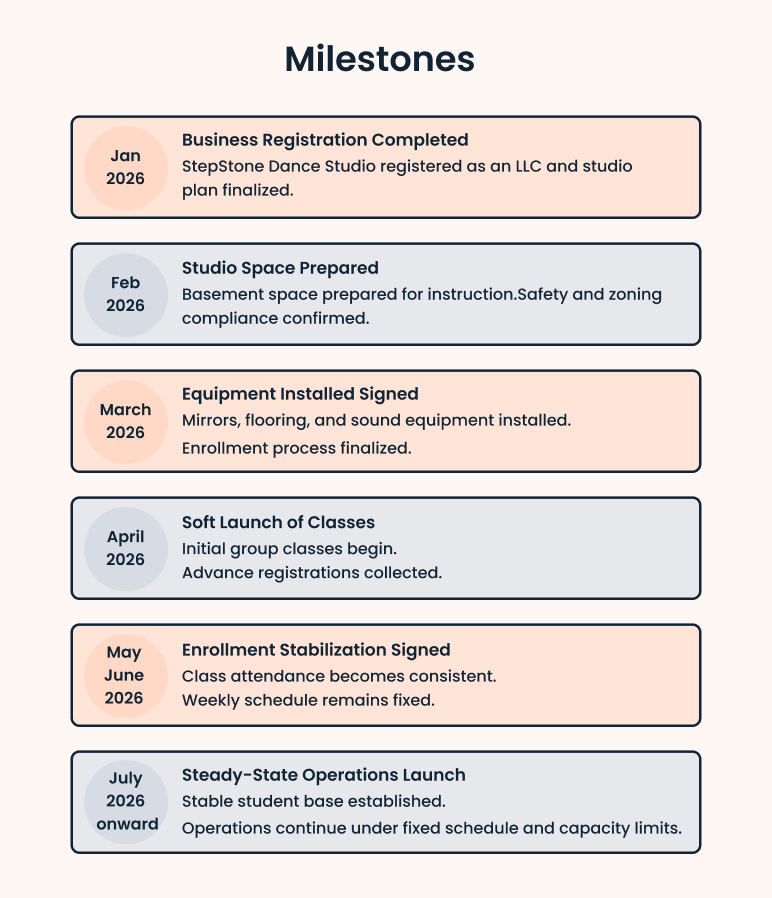
Each step is completed before moving forward. This helps reduce risk and ensures the studio does not take on too much at once.
7. Operations Plan
StepStone Dance Studio runs with a simple, owner-managed setup. Daniel Henry Conduct all the classes and takes care of scheduling, communication, and daily tasks. The weekly schedule gets set ahead of time and stays consistent throughout the year.
Facility Description and Space Utilization
The studio runs from a finished basement with about 600 square feet total. Around 400 square feet is used for dance instruction. The remaining area supports seating, storage, and controlled entry and exit.
The studio space includes:
- An open instruction area designed for small-group movement
- Wall-mounted mirrors for technique guidance
- A small seating and waiting area
- Storage for equipment and supplies
- A buffer area to manage arrivals and departures
This layout supports safe movement, clear supervision, and organized transitions within the limits of a home-based studio.
Class Schedule (Batch-Based)
The studio operates on a fixed, batch-based weekly schedule. Students enroll in a specific class time and attend that same session each week.
The schedule is structured as follows:
- Weekend daytime batches – children (beginner level)
- Weekday evening batches – teens and adults
- Two evening sessions per week – adult beginners
The studio runs a total of eight sessions per week. Each class is limited to six students. New students are permitted only if space is available within an existing batch. No additional sessions are added beyond the fixed schedule.
This structure keeps class size controlled and ensures consistent use of the home-based space.
Daily Operations and Staffing
StepStone Dance Studio is run only by the owner, Daniel Henry. He conducts every class personally and also handles scheduling, student registration, messages, and basic paperwork.
There are no staff members or outside instructors. The studio follows a fixed timetable and has limited space, so daily work stays steady and easy to manage.
Students must sign up before joining a class. Walk-ins are not allowed. Each class starts and ends on time. We do not offer late-night classes or open studio hours.
This setup keeps the workload steady and ensures all activities stay suitable for a home-based location.
Insurance Coverage Scope
StepStone Dance Studio carries general liability insurance that covers bodily injury and property damage during scheduled classes or approved sessions at the studio. The policy covers group classes, private lessons, and project-based choreography sessions held on-site. It protects against student injuries and third-party claims from regular studio activities. The policy meets local home-occupation requirements and gets reviewed every year to stay compliant.
Zoning and Home-Based Compliance
StepStone operates under local home-occupation rules and follows all applicable zoning requirements.
- Classes are held only during permitted hours
- Student capacity is limited to reduce neighborhood impact
- Noise is controlled through soundproofing
- Walk-in traffic is not allowed
- No exterior signage or commercial changes are used
These measures allow the studio to operate legally and responsibly within a residential setting.
Seasonality Considerations
Class demand may change during school holidays and summer months, especially for children’s programs. Since we follow a fixed weekly schedule and limit each class to six students, these changes affect enrollment numbers but not our operating costs.
The studio does not add extra classes during busy periods or reduce scheduled sessions during slower months. Advance registration and monthly enrollment remain in place year-round.
During school breaks, we may offer short workshops if they fit within the existing schedule. This approach keeps our operating hours stable and prevents frequent changes based on short-term demand.
Operational Continuity and Owner Availability
StepStone Dance Studio operates as a fully owner-led business. Daniel Henry manages all classes, scheduling, communication, and administration directly.
If Daniel Henry is unavailable for a short time due to illness or personal reasons, classes may be rescheduled within the same week or paused temporarily. Since the studio has no employees, payroll expenses, or commercial lease payments, a short interruption does not create ongoing cost pressure.
The studio’s limited schedule and advance payment structure allow classes to resume without long-term disruption or added expense.
8. Financial Plan
This financial plan reflects a small, home-based, owner-operated dance studio with a fixed weekly class schedule and limited capacity. The studio operates from a residential basement, incurs no commercial rent, and employs no staff.
Startup funding is completed prior to the start of Year 1 operations. The owner contributes initial capital, and a single microloan is used exclusively to purchase one-time startup equipment. Year 1 projections, therefore, represent operating activity only, following completion of startup funding and equipment purchase.
Revenue growth is driven solely by gradual increases in class attendance, limited private lessons, and occasional workshops. No expansion, pricing changes, or staffing additions are assumed during the projection period.
Owner compensation is handled through discretionary draws and is intentionally excluded from operating expenses. No owner draws are assumed in the projections. Net profit reflects business earnings only and should not be interpreted as personal income.
Income taxes are excluded due to pass-through treatment and owner-level variability.
Net cash accumulation reflects retained business earnings with no owner withdrawals and no reinvestment beyond the initial equipment purchase.
Important Assumptions
| Assumption | Details |
|---|---|
| Business model | Owner-operated home-based dance studio |
| Studio location | Residential basement |
| Commercial rent | None |
| Classes per week | 8 |
| Operating weeks per year | 50 |
| Group classes per year | 400 |
| Maximum class size | 6 students |
| Group class price | 15 per student |
| Average students per class | Year 1: 4 - Year 2: 5 - Year 3: 6 |
| Private lesson price | 40 per session |
| Private lessons | Year 1–2: 1 per week - Year 3: 2 per week |
| Workshops | Year 1–2: 2 per year - Year 3: 3 per year |
| Average workshop attendance | Year 1–2: 6 - Year 3: 8 |
| Workshop price | 25 per participant |
| Payroll | None |
| Owner compensation | Draws only, not expensed |
| Bank loan | 8,500 - 36 months - 10.5 percent fixed |
| Monthly loan payment | 276.27 |
| Annual debt service | 3,315.25 |
| Owner capital contribution | 3,500 |
| Depreciation | Straight-line over 5 years |
| Utilities | Semi-fixed, incremental household usage only |
| Expansion | None planned |
Revenue Projections
Revenue is based on the fixed weekly schedule, class capacity limits, and the studio’s pricing structure. The projections assume a gradual improvement in average attendance per class over time while keeping the number of weekly sessions unchanged.
| Revenue Source | Year 1 | Year 2 | Year 3 |
|---|---|---|---|
| Group Classes | $24,000 | $30,000 | $36,000 |
| Private Lessons | $2,000 | $2,000 | $4,000 |
| Workshops | $300 | $300 | $600 |
| Total Revenue | $26,300 | $32,300 | $40,600 |
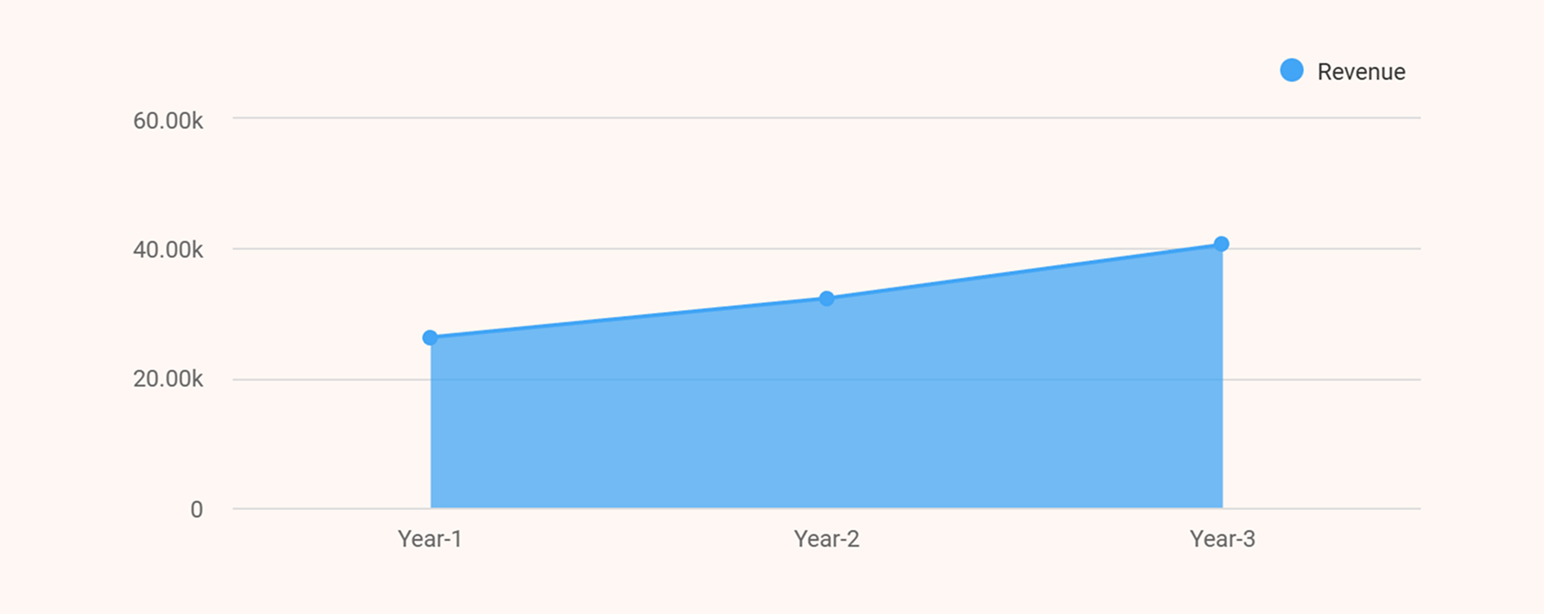
Group classes remain the primary source of revenue. Private lessons and workshops provide additional income within the existing schedule.
These projections reflect steady enrollment growth within the current space and fixed timetable. No expansion of sessions, staff, or operating hours is assumed.
Profit and Loss Statement
Income taxes are excluded due to pass-through treatment and owner-level variability.
| Profit and Loss | Year 1($) | Year 2($) | Year 3($) |
|---|---|---|---|
| Group dance classes | 24,000 | 30,000 | 36,000 |
| Private lessons | 2,000 | 2,000 | 4,000 |
| Workshops | 300 | 300 | 600 |
| Total Revenue | 26,300 | 32,300 | 40,600 |
| Studio supplies & cleaning | 810 | 870 | 1,090 |
| Utilities | 1,520 | 1,575 | 1,650 |
| Marketing & referrals | 600 | 720 | 840 |
| Insurance | 1,010 | 1,050 | 1,100 |
| Licenses & permits | 150 | 150 | 150 |
| Admin & misc | 160 | 180 | 210 |
| Repairs & maintenance | 300 | 300 | 300 |
| Total Operating Expenses | 4,550 | 4,845 | 5,340 |
| Operating income before depreciation & interest (EBITDA-style measure) | 21,750 | 27,455 | 35,260 |
| Depreciation | 1,240 | 1,240 | 1,240 |
| Interest expense | 772.44 | 492.21 | 181.10 |
| Net Profit Before Tax | 19,737.56 | 25,722.79 | 33,838.90 |
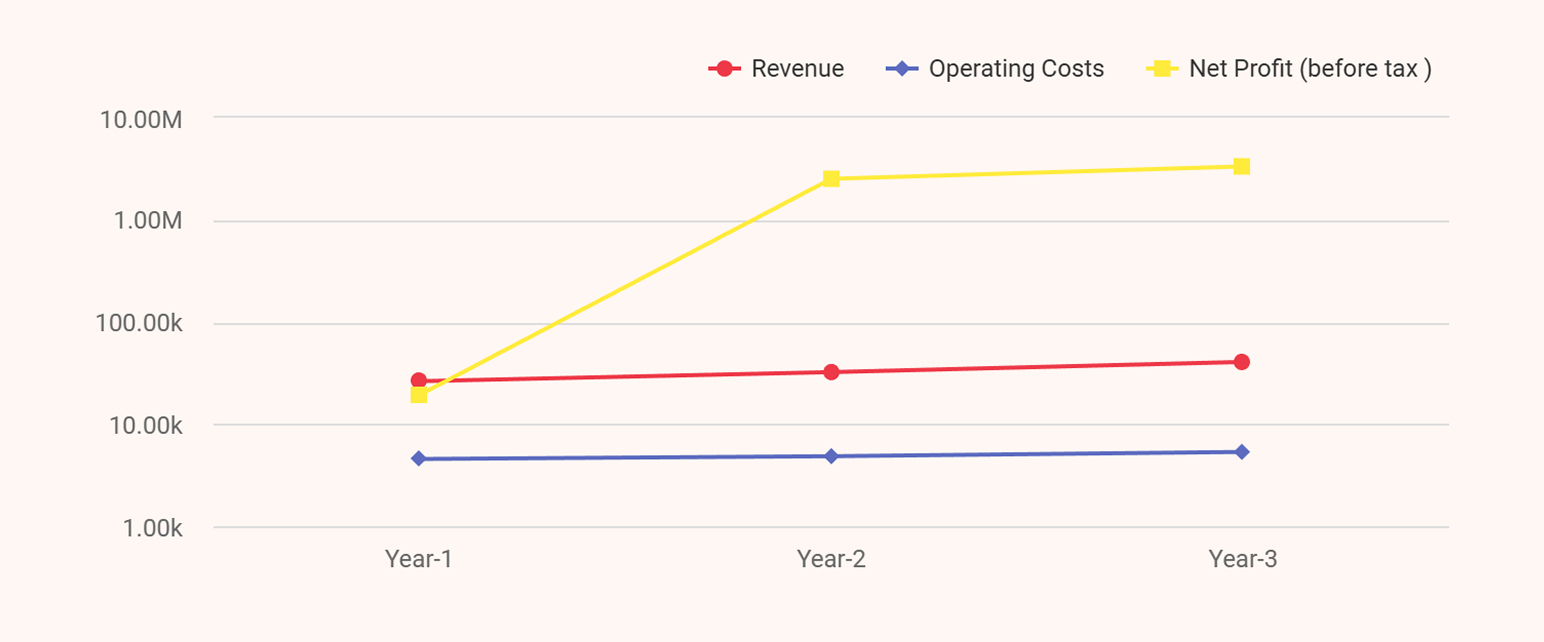
Loan Amortization Summary
| Category | Year 1 ($) | Year 2 ($) | Year 3 ($) |
|---|---|---|---|
| Beginning Balance | 8,500.00 | 5,957.19 | 3,134.15 |
| Principal Paid | 2,542.81 | 2,823.04 | 3,134.15 |
| Interest Paid | 772.44 | 492.21 | 181.10 |
| Ending Balance | 5,957.19 | 3,134.15 | 0.00 |
* Minor rounding differences may occur due to monthly amortization calculations aggregated into annual totals.
Cash Flow Statement
Year 1 reflects operating activity only. Startup funding and equipment purchase occur prior to Year 1.
Opening cash at start of Year 1: 3,500 (owner capital remaining after startup purchase). $2,300 of this amount was used for startup permits and launch marketing, which were expensed prior to Year 1 operations.
| Cash Flow | Year 1 ($) | Year 2 ($) | Year 3 ($) |
|---|---|---|---|
| Net profit | 19,737.56 | 25,722.79 | 33,838.90 |
| Depreciation | 1,240.00 | 1,240.00 | 1,240.00 |
| Operating cash flow | 20,977.56 | 26,962.79 | 35,078.90 |
| Loan principal repayment | (2,542.81) | (2,823.04) | (3,134.15) |
| Net change in cash | 18,434.75 | 24,139.75 | 31,944.75 |
| Opening cash | 3,500.00 | 21,934.75 | 46,074.50 |
| Closing cash | 21,934.75 | 46,074.50 | 78,019.25 |
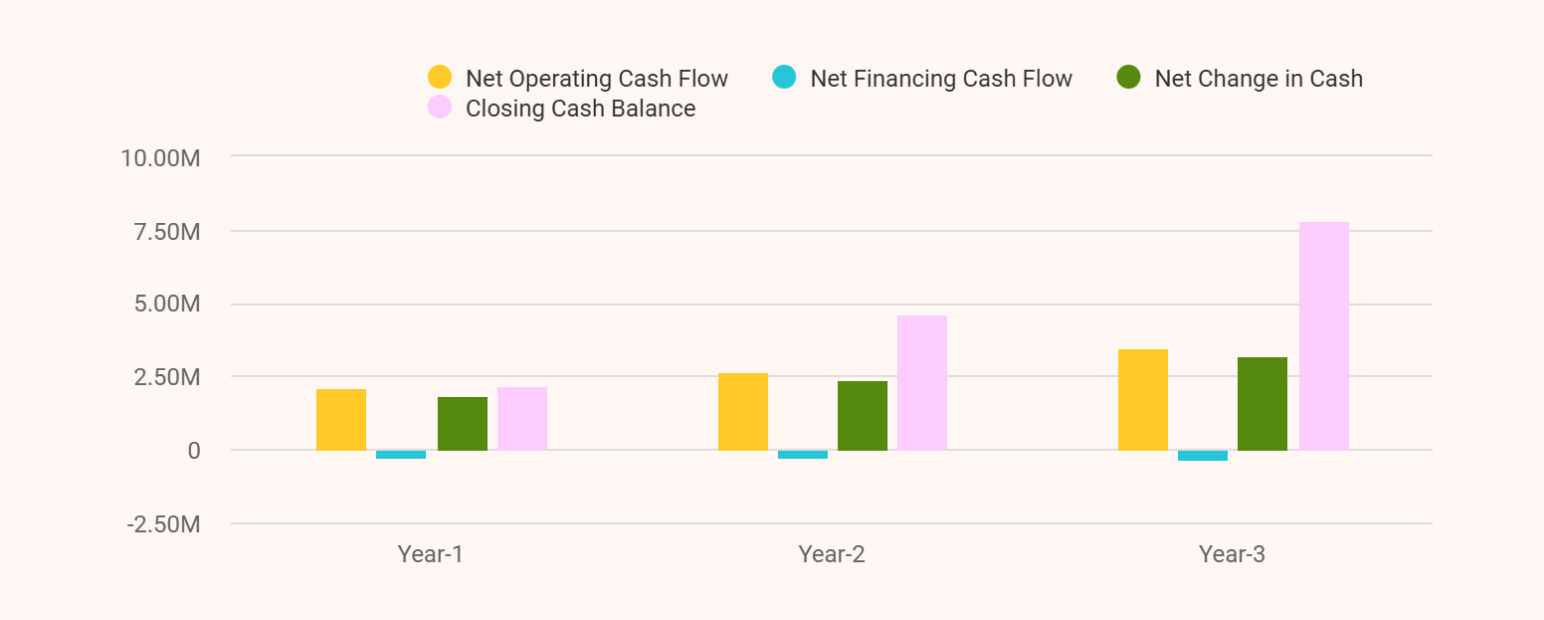
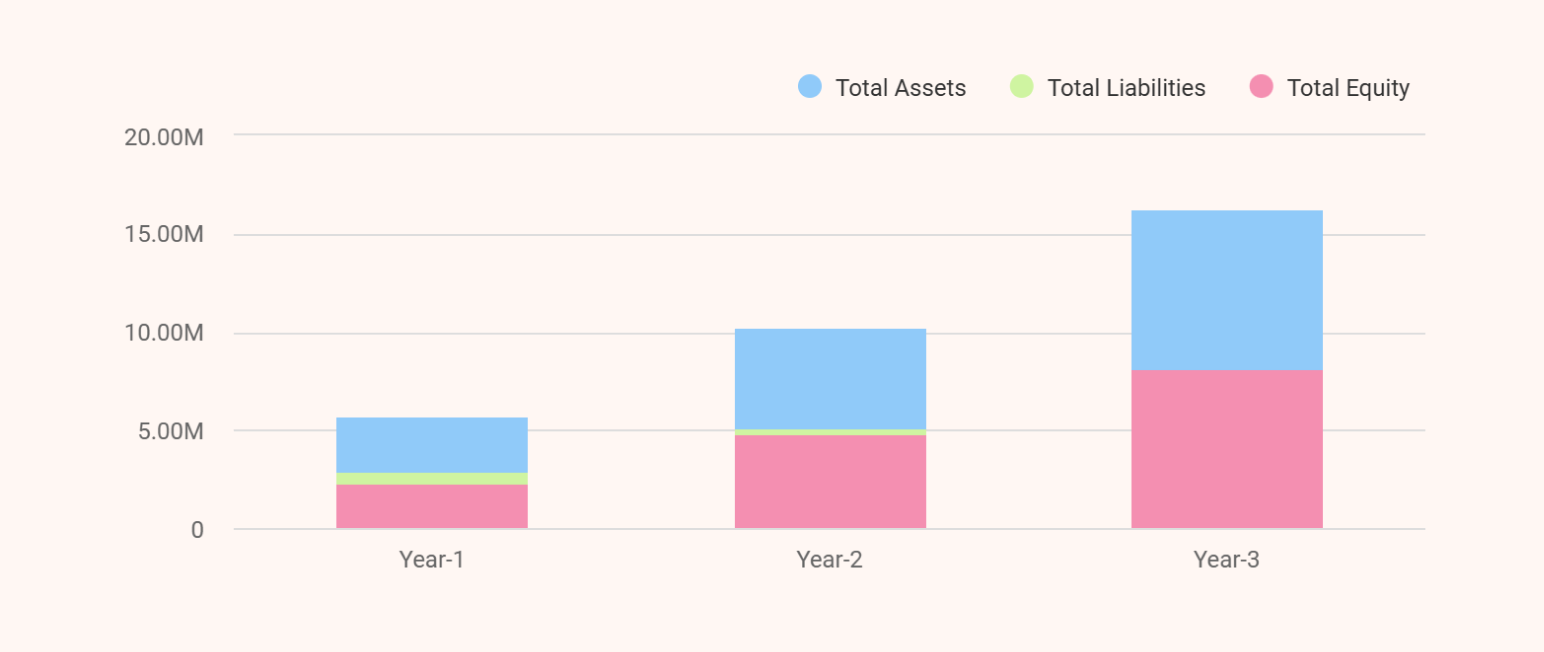
Balance Sheet
| Balance Sheet | Year 1 ($) | Year 2 ($) | Year 3 ($) |
|---|---|---|---|
| Assets | |||
| Cash | 21,934.75 | 46,074.50 | 78,019.25 |
| Fixed assets (at cost) | 6,200.00 | 6,200.00 | 6,200.00 |
| Less: Accumulated depreciation | (1,240.00) | (2,480.00) | (3,720.00) |
| Net fixed assets | 4,960.00 | 3,720.00 | 2,480.00 |
| Total Assets | 26,894.75 | 49,794.50 | 80,499.25 |
| Liabilities | |||
| Bank loan balance | 5,957.19 | 3,134.15 | 0.00 |
| Total Liabilities | 5,957.19 | 3,134.15 | 0.00 |
| Equity | |||
| Owner capital | 3,500.00 | 3,500.00 | 3,500.00 |
| Accumulated earnings | 17,437.56 | 43,160.35 | 76,999.25 |
| Total Equity | 20,937.56 | 46,660.35 | 80,499.25 |
| Total Liabilities & Equity | 26,894.75 | 49,794.50 | 80,499.25 |
Break-Even Analysis
Year 1 operating snapshot (cash basis)
| Item | Amount |
|---|---|
| Annual operating expenses | 4,550.00 |
| Annual debt service | 3,315.25 |
| Total fixed cash costs | 7,865.25 |
| Monthly fixed costs | 655.44 |
| Average revenue per group class (Year 1 average enrollment) | 60 |
| Group classes required per month | 10.9 |
| Actual group classes per month | (400 ÷ 12) = 33.3 |
Here’s to note: This represents cash break-even only and excludes depreciation and owner compensation. Private lessons and workshops are excluded for conservatism. Utilities are modeled as semi-fixed with modest annual increases, but treated as fixed for break-even simplicity. Marketing spend is assumed to be discretionary rather than volume-linked.
Financial Notes and Clarifications
- Startup equipment is depreciated on a straight-line basis over five years.
- Operations are cash or immediate-payment-based. No material receivables are assumed.
- High margins result from the absence of rent and payroll.
- Utility expense reflects incremental household usage attributable to studio operations only.
- Insurance includes general liability coverage and a home-based business endorsement.
- The studio operates within local home-occupation zoning limits.
- No owner draws are assumed. Excess cash is retained to reduce operating risk.
- Income taxes are excluded due to pass-through treatment and owner-level variability.
Download a Free Dance Studio Business Plan Template
Ready to start writing your dance studio business plan, but need some guidance? We’ve got you covered. Download our free dance studio business plan template (PDF) and start building your plan with confidence.
This easy-to-use template includes simple prompts and practical examples to help you write a clear and realistic business plan. You can customize it based on your studio type, class offerings, location, and goals, whether you are starting a home-based studio or a small commercial space.
Conclusion
After going through this StepStone Dance Studio business plan sample, now you have a good idea of how to create a comprehensive plan for your own dance studio business.
For an even quicker option, consider using an AI business plan generator. It streamlines the process and helps you create a full, investor-ready plan in minutes. Just answer a few basic questions about your business, and your plan is ready to go!
Get Your Business Plan Ready In Minutes
Answer a few questions, and AI will generate a detailed business plan.
Frequently Asked Questions
What financial documents are essential in a dance studio business plan?
The following financial documents are important to include in your dance studio business plan:
- Income statement
- Cash flow statement
- Balance sheet
- Break-even analysis
How long should my dance studio business plan be?
A business plan is usually 15–25 pages long. It should include the core sections—executive summary, market analysis, and financial projections—while remaining concise and actionable. The length may vary depending on the type of business plan and the level of detail included.
Where can I find a ready-to-use dance studio business plan example?
You can find a variety of dance studio business plan templates and downloadable PDFs on platforms like Upmetrics, LivePlan, Bplans, and SCORE.
Do I need a marketing plan for a dance studio business plan?
Yes. A marketing plan helps keep class enrollment steady and predictable, even for a small, home-based dance studio.
It helps by:
- Making sure nearby families and students know your studio exists
- Using simple local channels like community groups, flyers, and referrals
- Filling limited class slots without overbooking or overpromoting
- Supporting repeat enrollment through clear schedules and consistent messaging
- Keeping marketing focused on your class size, location, and teaching style
A clear marketing plan helps match demand to capacity while keeping costs low and operations manageable.


Follow Vinay Kevadiya


